
I was roused from my hiatus while driving to work this week and listening to the New York Times podcast The Daily. I felt compelled to listen to this particular episode as it’s a retrospective on the work of Rob Reiner, who left us too soon this past weekend. The episode is a pretty standard review of Reiner’s body of work, but towards the end, guest Wesley Morris reads a passage from David Thomson’s Biographical Dictionary of Film:
“As a director, Rob Reiner seemed more struck or poleaxed by the notion that niceness could save the world. It is a petty thought, but one that stifles so many human and social realities. And so his work turns to pie in the sky, with good and bad, all too clearly labeled. He’s carried along by a fundamental decency and a sense of scenes that play, but his films are predictable from their first moments, and they begin to establish a weird, dumb orthodoxy that if we’re good to our kids, everything will be OK. This is not true. Life is more interesting.”
Sick prescience aside, this is a horrible take. It being quoted by the Times as Morris gushes about Thomson’s bona fides as a critic is disgusting. The idea that Reiner’s art is in any way “less-than” because a film like When Harry Met Sally (1989) doesn’t feel real enough is anathema to what cinema is about, and what film criticism should seek to do. Bambi (1942) might follow a “dumb orthodoxy” established by the five Disney animated films that preceded it. It’s still Bambi.
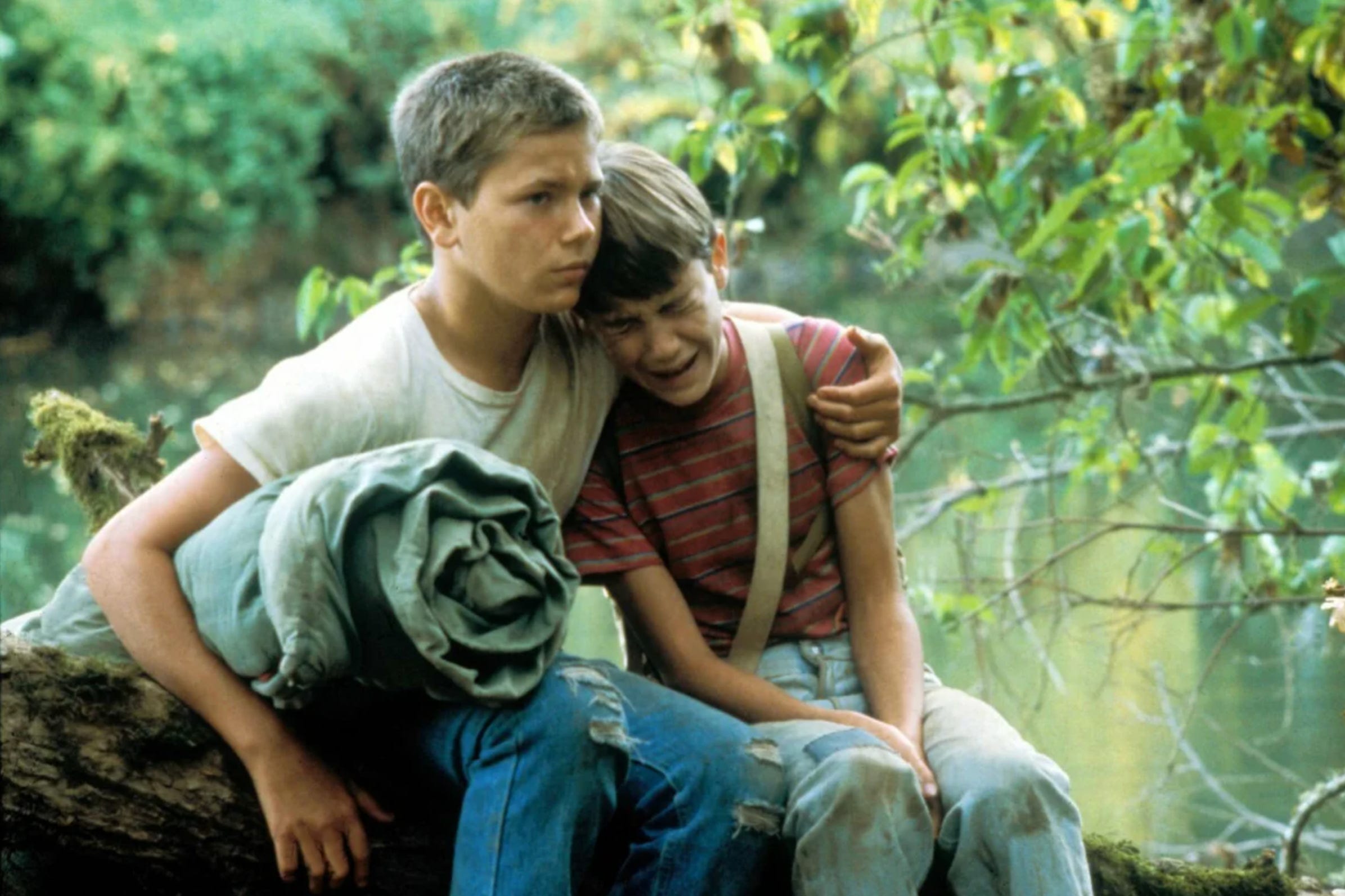
And Stand by Me (1986), a film based on a Stephen King novella, contains the unfiltered darkness you would expect from King. Adults can be cruel, kids can be evil, and things don’t always work out. The movie opens with an adult Gordie (Richard Dreyfuss), now a writer, sitting alone in his car after reading a newspaper headline about the death of one of his childhood friends. From there, the film drifts backward to that summer in 1959, when four boys: Gordie (Wil Wheaton), Chris (River Phoenix), Teddy (Corey Feldman), and Vern (Jerry O’Connell) set out on a two-day quest to find a missing boy’s body. In the days before cheap and ever-present entertainment, you had to work for it.
For all its talk of death, Stand by Me is really about life and how we cope with one of life’s greatest constants: pain. It’s the rare coming-of-age story that feels both universal and specific. The kids strike genuine chords of laughter, machismo, quiet introspection: the film argues that friendship is what keeps us sane in a painful world. You don’t realize the film is making this argument while watching it: each scene feels authentic, so you start watching and, before you know it, the movie’s over.
Reiner directs the film with an honesty that’s disarming. There’s no gloss, no sentimental softening of the edges. The boys talk the way kids talk. Crudely, curiously, endlessly, and Reiner never interrupts their rhythm. Stephen King’s original novella The Body gives the story its emotional backbone, but Reiner finds the warmth in it. He doesn’t flinch at the darkness, yet he never lets it overpower the small joys: singing “Lollipop” on the tracks, arguing about Goofy’s species, roasting marshmallows, daring each other to be brave. What makes Stand by Me linger isn’t its nostalgia but its truth. The film understands that friendship at that age is its own kind of love story, as fragile and fierce as any romance. “I never had any friends later on like the ones I had when I was twelve.”
I find myself thinking about the distance between who we were and who we become. Maybe that’s the real reason Stand by Me endures. It’s not just a story about kids on a journey: it’s a mirror for every adult who once was one. When Gordie looks back on that summer, he’s not just remembering his friends or the adventure. He’s remembering the moment he realized he’d never be the same again.
Reiner’s films may be idealistic, romantic, and heartfelt, but this is what makes them great. And for any critics who would say “This is not true” to stories where things turn out ok, or that “life is more interesting,” I would ask: how is life ever supposed to imitate art if art has to be life?
Stand by Me
Written by Raynold Gideon and Bruce A. Evans; Based on the novella The Body by Stephen King; Directed by Rob Reiner
1986
89 minutes
English
Recommended way to watch (at time of publication): Streaming on Netflix
You’ll like this if you like: The Outsiders (1983), Now and Then (1995), My Girl (1991)
This was the only movie we owned for our beta max. (Don’t know why that author box is showing up here.)